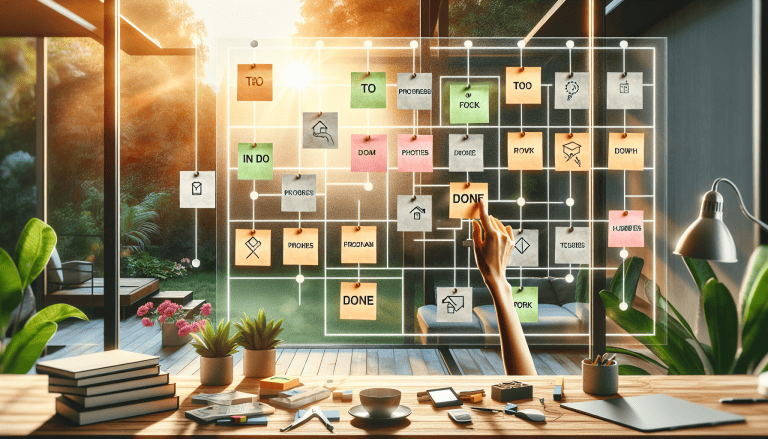
Task List Mastery: How Transforming Chaos into Control can Supercharge Your Life

Like many of us, I’ve faced the overwhelming sensation of staring at a seemingly endless task list, searching for a lifeline in the sea of responsibilities. It’s a universal struggle—transforming that creeping feeling of chaos into a symphony of control and achievement. We rely on our to-do lists not simply as a collection of tasks but as a powerful control app for breaking down ambitious goals into manageable pieces that provide a clear daily plan through our daily routines. From the satisfaction of checking off completed items to the assurance that nothing slips through the cracks, a well-crafted to-do list is a cornerstone in our quest for getting organized and chaos management.
In this article, we’ll embrace a personal yet universal journey from confusion to clarity. I’ll guide you through mastering your task list by centralizing data with tools that sync your Google to-do list across platforms, prioritizing tasks with thoughtful strategies like the Eisenhower Matrix, and embracing digital tools that transform your traditional to-do list into a streamlined project. We’ll explore the art of scheduling, from theming your workdays to carving out vital downtime, all to ensure that each week is a portrait of efficiency, focus, and control. Let’s embark on this transformative path together, learning how to wield our task list as the ultimate tool in evolving toward a resilient, fulfilling, and organized life.
Turning Your Task List into a Manageable Project
Transforming a sprawling task list into a structured, actionable project is a journey I’ve embarked on with the aid of some remarkable digital tools. Let’s dive into the process of breaking down your tasks with the precision of a project manager, utilizing a gtd app or khaos control cloud to control the chaos. By leveraging the power of a to done list and the efficiency of getting things done in one minute, you can create a to do list you can confidently tackle, ensuring time management and chaos control are at the forefront of your strategy.
Step 1: Dissect Your To-Do List
- Identify Task Components: With Breeze, I’ve learned to scrutinize each item on my to-do list to determine if it represents a single action or multiple objectives. By recognizing tasks that encompass various goals, results, parts, or phases, I can better structure my workflow ([Breeze][1]).
- Timeline and Subtasks: Setting a timeline is crucial. I sequence my tasks and subtasks in Breeze, ensuring each step is appropriately time-bound and contributes to the project’s momentum.
Step 2: Prioritize for Impact
- Crafting a Success List: Taking a page from Naphtali Hoff, PsyD, I’ve shifted from an overwhelming to-do list to a curated “success list.” This means being selective, scheduling time on my calendar for high-priority tasks, and trimming the list to reflect true priorities ([Naphtali Hoff][2]).
- Breaking Down Large Tasks: I follow a six-step process to deconstruct intimidating tasks into digestible parts, which includes visualizing the end goal, detailing the steps required, and creating a timeline for completion ([Indeed][3]).
Step 3: Choose the Right Tools
- Project Management Platforms: Tools like Todoist and Monday.com have been instrumental in my task management evolution. With Todoist, I can convert entire projects into tasks with just a few clicks, simplifying my project planning ([Todoist][4]). Meanwhile, Monday.com has allowed me to create subitems for each project, optimizing productivity and managing workloads effectively.
- Trial and Experimentation: I’ve taken advantage of Asana’s 30-day free trial, which has been invaluable for organizing work into projects and tasks, tracking progress, and automating manual processes ([Asana][5]).
Incorporating these methodologies and tools has not only streamlined my task list but also instilled a sense of control and progress in my daily routine. The key is to find a system that resonates with your workflow and to remember that the goal is not just to complete tasks but to achieve meaningful progress toward your larger objectives.
[1]: https://www.breeze.pm/blog/240-break-big-tasks-into-smaller-manageable-pieces-convert-to-dos-to-tasks
[2]: https://www.linkedin.com/pulse/manage-prioritize-your-to-do-list-naphtali
[3]: https://www.indeed.com/career-advice/career-development/how-to-break-down-tasks
[4]: https://www.timecamp.com/planner/how-to-make-to-do-lists/
[5]: https://www.quora.com/How-can-you-convert-a-project-into-a-task-in-Todoist
Conclusion
Throughout our exploration, we’ve navigated the intricacies of task list mastery, pinpointing strategies and tools that morph unwieldy lists into structured, actionable projects. By dissecting tasks and prioritizing for impact, we’ve seen how a purposeful approach to our to-do’s can shift our productivity from stagnant to dynamic. Crucially, the art of task management is not just about crossing off items, but about crafting a narrative of success—each checked box a milestone in the grander voyage of our personal and professional endeavors, a testament to chaos and control achieved through a chaos manager or chaos app.
This journey from chaos to control demonstrates the profound significance of organized task management in carving out a pathway to efficiency and fulfillment. As we integrate these methods into our routines, we invite a more resilient and focused life, one where our energy harmonizes with our ambitions. By steadfastly applying these principles, you’re not just conquering a list, but mastering the rhythm of your day, the balance of your week, and the vision for your future.
FAQs
In the realm of task management, questions abound, and the path to clarity is often paved with the wisdom gleaned from addressing these queries head-on. Here are some frequently asked questions that I’ve encountered on my journey to mastering the task list, where dolist apps, integrated calendars, and a focus on the right app can provide invaluable guidance.
- Clarifying Task Details: Before diving into a task, I ensure to ask the right questions: What is the desired outcome? What actions are required? What’s the deadline? How does this task affect my other work? Are there any potential roadblocks? And who has the authority to declare it complete? These questions, inspired by the guidelines from ProjectManager.com, provide a clear framework for tackling each task with purpose and precision ([ProjectManager.com][1]).
- Task Management Best Practices: My experience has taught me that effective task management is multifaceted:
- Break down projects into smaller tasks.
- Allocate tasks to the right team or individual.
- Prioritize tasks to focus on what matters most.
- Organize tasks efficiently to streamline workflows.
- Foster collaboration and empower employees to take ownership.
- Continuously improve task execution to refine the process.
- These principles, echoed by ClickUp, have been instrumental in transforming my task list into a dynamic force for productivity ([ClickUp][2]).
- Optimizing with Task Management Software: To maximize efficiency with task management software, I’ve developed a routine that involves:
- Creating a project calendar to visualize deadlines and milestones.
- Prioritizing tasks to ensure the most critical are addressed first.
- Adding descriptions and files to keep all relevant information accessible.
- Assigning tasks to ensure accountability.
- Visualizing workflows to understand the progress of tasks.
- Classifying tasks to maintain order and ease of access.
- Encouraging team collaboration and communication.
- Tracking updates and changes to stay informed.
- Utilizing the dashboard for insights and to receive notifications.
- These steps, essential for optimizing tasks and workflows, have become a part of my daily routine, enabling me to stay on top of my task list with greater ease.
Personal task management has been a game-changer in how I approach my daily to-dos. With a plethora of apps available, I’ve learned to look for features that align with my workflow—like cloud sync for access anywhere, repeating tasks for regular reminders, and custom views for a personalized experience. By implementing morning and evening rituals to review my task list, working on the next actions for projects, and maintaining my system by regularly clearing the inbox and reviewing projects, I’ve found a sustainable rhythm. And while it’s tempting to switch apps in search of the perfect system, I’ve learned that consistency is key—too frequent changes can disrupt the very order we seek to establish ([LinkedIn][3]).
[1]: https://www.projectmanager.com/guides/task-lists
[2]: https://help.clickup.com/hc/en-us/articles/7784081674263-Tasks-in-Multiple-Lists-FAQ
[3]: https://www.linkedin.com/pulse/maybe-you-should-keep-your-personal-task-list-super-simple-davenport